
Your Voice Is Not Just How You Speak
Have you ever tried to speak up for yourself and felt your throat close, your words disappear, your volume drop to almost nothing? Have you been in a hard conversation — the kind that actually matters — and found that your voice simply wouldn't come?
It isn't weakness. It isn't shyness. And pushing through it rarely helps.
What's happening is your nervous system doing what it was built to do: protect you. Understanding why it does that is where healing actually starts.
The Voice and the Nervous System Are One System
Most people think of the voice as a communication tool. It's something more fundamental than that.
Polyvagal theory, developed by Dr. Stephen Porges, describes how our nervous system organizes around states of safety, mobilization, and shutdown. When you feel safe and connected, your voice carries warmth, resonance, and range. In fight-or-flight, it becomes tight and elevated. In freeze — what Porges calls dorsal vagal shutdown — your voice can disappear almost entirely.
This isn't a metaphor. The ventral vagal complex, the newest branch of the vagus nerve, connects directly to the muscles of the face, middle ear, larynx, and pharynx. It governs vocal prosody, the warmth or flatness in your tone, and your ability to tune into human speech frequencies. It's also the neural infrastructure for social connection itself.
As Porges' research shows, this same nerve circuit controls facial expression — the physical substrate of how we signal safety to one another.
Your voice and your nervous system aren't just connected. They're the same system. Which means the history of how safe it has felt to be heard — beginning in the very first days of your life — is written directly into how your voice functions today.
How Early Attachment Shapes the Voice You Have Now
The story of your voice begins before you had words. It begins in infancy, when sound was your only language and being heard was a matter of survival.
Attachment theory, developed by John Bowlby and expanded by Mary Ainsworth, describes how early caregiving shapes the patterns we carry into all our relationships. When caregivers are attuned and reliable, children develop a secure sense that it's safe to have needs, express distress, and reach for connection. When caregiving is inconsistent, unavailable, or frightening, children adapt — and those adaptations don't stay abstract. They live in the body, in the breath, and in the voice.
Anxiously attached individuals often learned that emotional expression had to be amplified to get a response. Their nervous systems became hyperactivated in attachment relationships, braced for abandonment, vigilant for disconnection. The voice can become urgent, over-explaining — as if going quiet means being forgotten.
Avoidantly attached individuals often learned early that expressing needs led to rejection or silence. They adapted by minimizing, self-containing, going still. The voice frequently becomes flat, clipped, or simply disappears in moments of emotional need. Speaking up can feel not just uncomfortable but genuinely dangerous at a body level.
Disorganized (fearful-avoidant) attachment develops when the caregiver is simultaneously the source of comfort and threat. These individuals often experience confusion and fear in close relationships, wanting connection and fearing it in equal measure. The voice may fluctuate unpredictably — open and then suddenly closed, present and then gone.
These aren't character flaws. They're adaptive strategies developed in response to real relational experiences. And they can be healed.
The Truncated Attachment Cry
When infants are distressed, they cry. That cry is a full-body bid for co-regulation — breath, diaphragm, throat, face, and nervous system working together in a coordinated call for connection. When a caregiver responds, the infant's system completes a cycle: distress, expression, contact, relief.
But what happens when that cry is met with silence? With overwhelm, inconsistency, or a caregiver who is frightened or frightening? The infant learns — not cognitively, but somatically — that full distress expression is not safe. Over time, the cry gets cut short. The breath catches and holds. The throat closes. The sound is swallowed before it can emerge.
This is what somatic therapist and educator Linda Thai calls the truncated attachment cry: a distress response that learned to abort itself before completion. It becomes embodied, held in the oral muscles, the jaw, the diaphragm, the breath patterns that persist across a lifetime.
And it travels forward. It shows up every time you try to set a boundary, speak your truth, ask for what you need — and something stops you before you can finish the reach. Research linking disrupted attachment, trauma, and the voice confirms what somatic practitioners have long observed: the voice is one of the primary places where early relational wounding gets stored.
Many people who struggle to speak up aren't dealing with a personality issue. They're carrying an incomplete physiological response. Their body is waiting for the conditions in which it can finally finish.
IFS and the Parts That Formed Around Attachment
Internal Family Systems gives us a way to understand how attachment experiences shape the internal world — and how healing can begin from within.
In IFS, we understand the psyche as made up of parts: distinct inner voices, roles, and responses that developed to help us survive. Viewed through an attachment lens, something becomes clear: our attachment wounds don't just shape our relationships with other people. They shape the relationship we have with ourselves.
Exiles carry the original pain — the younger, more vulnerable parts that hold the memory of the truncated cry, the unmet reach, the moment of not being seen. They carry the core beliefs that formed in those early ruptures: I'm too much. My needs don't matter. If I'm fully myself, I'll be left.
Protectors organized themselves around keeping those exiles hidden. And the specific shape of those protectors often mirrors the attachment style that formed in early childhood.
The anxiously attached parts may show up as people-pleasers, over-explainers, relentless reassurance-seekers — parts that fear abandonment so deeply they work constantly to earn connection through accommodation.
The avoidantly attached parts may present as the inner critic, the minimizer, the voice that says don't need, don't ask, don't bother — parts that learned self-sufficiency was safer than vulnerability.
Disorganized parts may swing between the two, craving closeness and pulling back in the same breath, because no strategy ever fully worked.
None of these parts are the problem. They are doing their jobs with extraordinary loyalty — jobs that made complete sense when they were formed. The work of IFS isn't to silence or override them. It's to approach them with curiosity, understand what they're protecting, and earn their trust so they no longer have to work so hard.
Within the IFS model, the Self — calm, curious, compassionate — can become what the system never had: a consistent, trustworthy inner presence. A secure base. The place from which exiles can finally be heard.
What This Work Looks Like in Practice: Christy's Approach
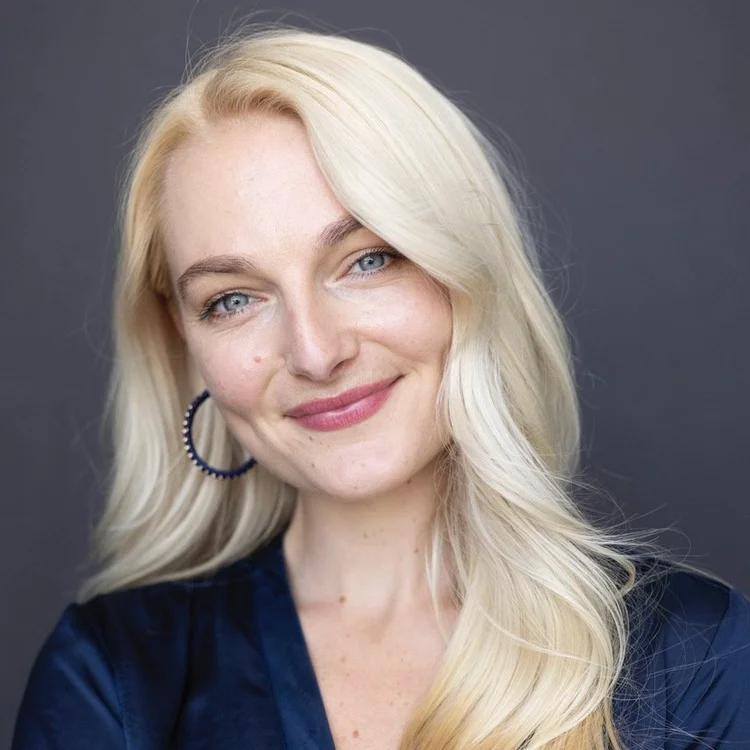
I'm Christy Peterson, an Associate Marriage and Family Therapist at Green Willow Counseling. Before I was a therapist, I spent over a decade as a classical singer — earning a Bachelor's and Master's in Vocal Performance from Westminster University and UC Santa Barbara.
That training isn't incidental to my clinical work. It's central to it.
Classical vocal training is a form of somatic education. It teaches you to feel resonance in your chest and skull, release habitual tension in the jaw and tongue and neck, breathe from the diaphragm rather than the upper chest, and trust that a supported, open voice will carry without force. Those aren't performance skills. They're nervous system skills — the same ones that matter when you're trying to hold your ground in a hard conversation, set a boundary, or simply be present in your own body.
When I sit with a client, I notice things most clinicians aren't trained to track: the catch in the breath before a difficult word, the voice that flattens when a topic moves toward something painful, the held exhale that signals shutdown, the moment the throat closes and the sentence doesn't finish. These are somatic data — real-time information about where someone's nervous system is and what feels safe to be said.
My approach is integrative and trauma-informed, rooted in Internal Family Systems and shaped by narrative and nervous system-based frameworks. This isn't singing therapy, and it isn't voice coaching. It's deep, embodied, parts-based work grounded in a few core understandings:
The body holds what the mind has learned to bypass. Regulation begins in the soma, not in the story.
Your protective parts developed for good reasons. The goal is not to eliminate them, but to help them update.
The voice is a barometer of nervous system state. Shifts in breath, resonance, and vocal quality reflect real shifts in your internal experience.
Full self-expression is a nervous system capacity, not a personality trait. It can be developed. It can be restored.
Sessions may include attention to breath patterns, somatic tracking of where tension or contraction lives in the body, IFS parts work oriented toward voice and self-expression, and exploration of what it actually feels like — in the body — to be fully heard.
I work with adolescents 14+, adults, couples, and families navigating trauma, anxiety, depression, grief, faith transitions, and relationship challenges. I'm a committed advocate for the LGBTQIA+ community and bring an affirming lens to every session.
The Green Willow Approach
This depth of work is possible because of the environment I'm honored to practice within.
At Green Willow Counseling, founded by Elana Olson, LCSW, our practice is built on a belief that healing happens in the mind, body, and soul — and that it looks different for every person. Our team brings a wide range of specialties under one roof, all grounded in trauma-informed, whole-person care.
Our clinicians include:
Elana Olson, LCSW, founder, with deep expertise in trauma and systemic healing
Bekah Hill, LCSW, experienced in trauma, relationships, and family systems
Kilee Luthi, CMHC, bringing a compassionate, strengths-based lens to mental health
Jacob Fike, ACMHC, specializing in men's issues, depression, and grief and loss
Nikki Arnold-Moon, CSW, offering trauma-informed individual support
Marcie Johnson, Clinical Intern, with extensive experience supporting teens and the deaf community
Christy Peterson, AMFT (that's me), IFS-centered therapy with a somatic vocal approach
We offer services in Spanish and are committed to inclusive, affirming care.
Who This Work Is For
You might resonate with this approach if you:
Struggle to speak up for yourself in relationships, at work, or in conflict
Feel your voice go flat, tight, or absent when emotions run high
Know what you want to say but can't seem to get it out
Identify as a people-pleaser or find yourself apologizing constantly
Have a history of feeling unheard, dismissed, or like you're too much
Experience anxiety, shame, or self-doubt around self-expression
Recognize your attachment patterns and want to understand how they live in your body
Have done talk therapy and feel like something is still missing — the insight is there, but it hasn't landed in the body yet
Reclaiming Your Voice
Your voice was not always this quiet. Before you learned to contain it — before the cry was truncated, before the protective parts stepped in — there was a you that knew how to make sound, how to reach out, how to be present and expressed in the world.
That part of you isn't gone. It's waiting.
This work creates the conditions for it to emerge: safely, at your pace, with a nervous system that's genuinely regulated and an internal system that finally trusts it's safe to be heard.
Ready to take the next step?
Green Willow Counseling 6790 South 1300 East, Cottonwood Heights, Utah 84121
385-436-2075
Christy is currently accepting new self-pay clients and those with PEHP, EMI, Select Health, CVR, BCBS, HMHI-BHN, and University of Utah plans (Healthy Preferred, Healthy Premier & U Health Plus).
FAQ
Frequently asked questions about voice, trauma, and IFS therapy
Why does my voice disappear when I try to speak up?
When your voice disappears during conflict, stress, or emotional conversations, it may be your nervous system moving into protection. Instead of being a personality flaw or weakness, this can be a body-based response connected to fear, trauma, attachment wounds, or past experiences of not feeling safe to be heard.
What does the voice have to do with the nervous system?
The voice is closely connected to the nervous system. When you feel safe, your voice often has more warmth, steadiness, and range. When your body senses threat, your throat, breath, jaw, and vocal tone can shift into fight, flight, freeze, or shutdown patterns.
Can trauma affect your voice?
Yes. Trauma can affect breath, tension, posture, throat constriction, vocal tone, and the ability to speak openly. For some people, the voice becomes quiet, flat, tight, shaky, or unavailable when emotions or relational risk feel high.
What is the connection between attachment and voice?
Early attachment experiences shape how safe it feels to express needs, distress, boundaries, and emotions. If being heard felt unsafe, ignored, inconsistent, or overwhelming, the body may learn to minimize, amplify, freeze, or shut down expression.
What is a truncated attachment cry?
A truncated attachment cry refers to a distress response that learned to stop before completion. Instead of fully reaching for comfort or connection, the breath may catch, the throat may close, and the sound may be swallowed. This can continue into adulthood as difficulty asking, speaking up, or being heard.
How does IFS therapy help with self-expression?
Internal Family Systems therapy helps identify the protective parts that learned to silence, over-explain, please others, withdraw, or shut down. Rather than forcing those parts to change, IFS helps you understand their role, build trust, and create more internal safety for authentic expression.
Is this the same as voice coaching or singing therapy?
No. This work is not singing therapy or performance coaching. It is trauma-informed therapy that uses awareness of breath, body, nervous system patterns, parts work, and vocal expression as pathways toward healing and self-connection.
Who might benefit from this type of therapy?
This approach may be helpful for people who struggle to speak up, set boundaries, feel heard, express emotions, or stay connected to themselves during hard conversations. It may also support those navigating trauma, anxiety, attachment wounds, people-pleasing, grief, faith transitions, or relationship challenges.
AUTHOR
Christy Peterson, AMFT
Christy provides trauma-informed therapy rooted in Internal Family Systems, somatic awareness, attachment work, and nervous system regulation. With over a decade of classical vocal training, she brings a unique lens to helping clients reconnect with their voice, body, and full self-expression.